
Fiscalization and Real-Time Reporting in Ivory Coast
Author
Ameera
Date Published

Côte d’Ivoire has moved from physical tax stickers, introduced in 2005, to digitally authenticated fiscal documents. Overseen by the Direction Générale des Impôts (DGI), the system records and certifies sales while making transaction information available to the tax administration.
By 24 February 2026, more than 52,000 businesses had registered on the electronic invoicing platform. For businesses operating in the country, the practical challenge is now understanding which documents to issue, how to connect their systems and which records to preserve.
Latest News
Embeds a monitoring pages group for this blog article
{{__MONITORING_PAGES_GROUP:blog_articles_575__}}A further notice, published on 15 September 2026, requires API-connected businesses to correct technical data inconsistencies within 45 days of the notice's signature on 14 September.
The requirements concern taxpayer identifiers, customer information, foreign currencies, VAT treatment and transaction values. Non-compliant integrations risk temporary API key suspension after the deadline.
What does fiscalization mean in Côte d’Ivoire?
Fiscalization means recording commercial transactions through a DGI-controlled certification process.
The framework uses two types of fiscal documents:
- FNE (Facture Normalisée Électronique): Certified documents generated through the DGI platform or authorised API integrations.
- RNE (Reçu Normalisé Électronique): Certified receipts issued through Terminaux d’Émission de Reçus Normalisés Électroniques (TERNE).
Both use an electronic signature consisting of a verification QR code, an official FNE visual and an uninterrupted annual numbering sequence.
The DGI can access certified transaction records through its central platform, improving traceability and fiscal control.
What fiscalization regulations apply in Côte d’Ivoire?
Facture Normalisée Électronique (FNE) for B2B and B2G
The FNE replaces traditional paper invoices with DGI-certified documents for business and government transactions. Each invoice receives official fiscal authentication, including an identification number (Numéro de Compte Contribuable – NCC), a digital seal and a verification QR code.
Reçu Normalisé Électronique (RNE) for Cash and Retail Sales
The RNE certifies retail and point-of-sale transactions through DGI-approved systems. Businesses using cash registers must issue compliant receipts through the applicable TERNE terminal procedure rather than ordinary, uncertified till receipts.
DGI Certification Unit Fees
The tax administration applies a nominal electronic certification fee per cleared document to maintain the digital platform infrastructure:
- Standard electronic invoice (FNE): 20 FCFA
- Standard electronic receipt (RNE): 15 FCFA
- Cash-settled RNE exceeding 100,000 FCFA: 25 FCFA
Who must comply, and who is exempt?
The rules cover commercial operators regardless of legal form or tax regime, subject to statutory exemptions.
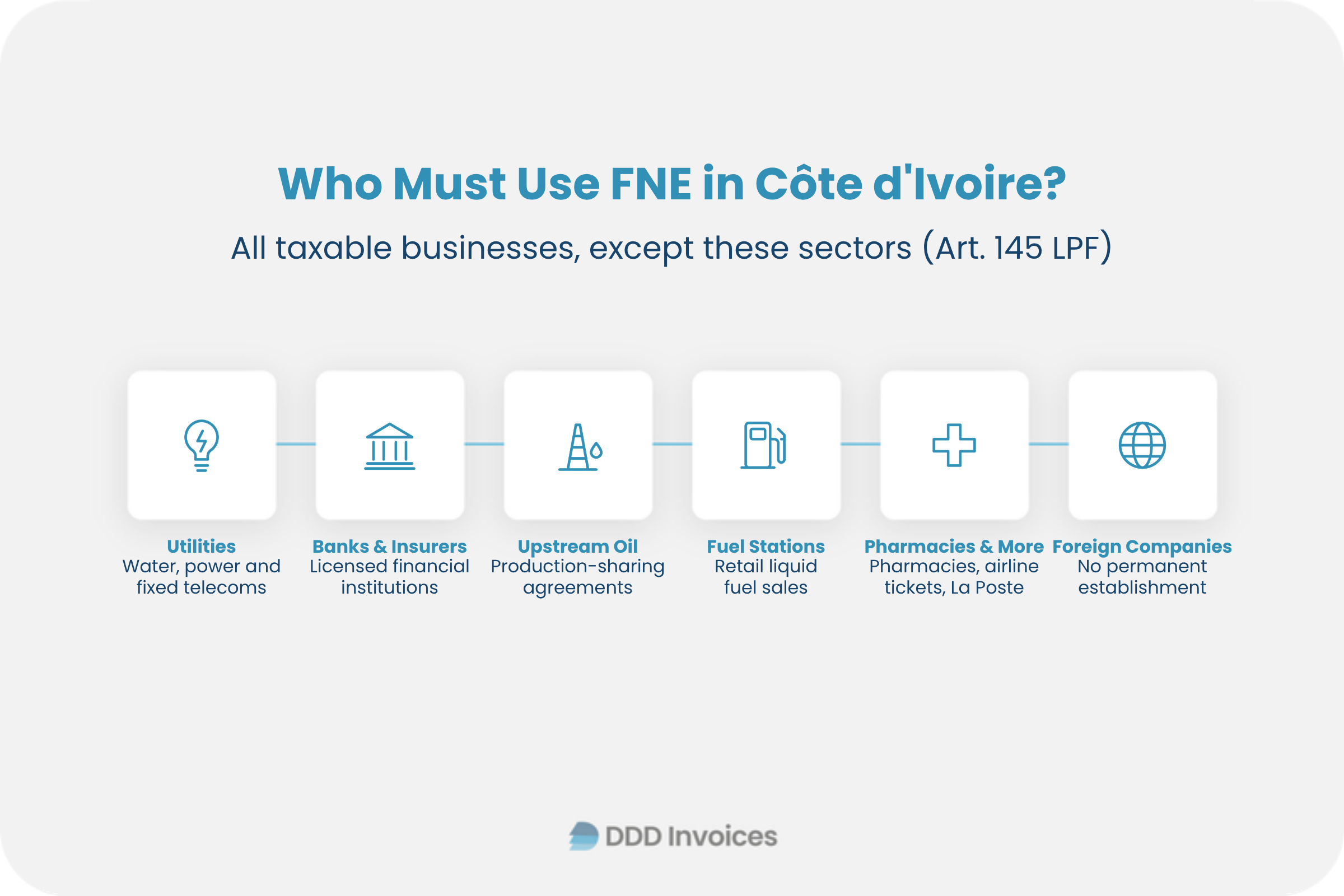
These include banks, insurers, pharmacies, airlines, qualifying public-service concessionaires, certain petroleum activities and foreign businesses without professional installations in Côte d’Ivoire.
Exemptions can be activity-specific. Fuel sales at service stations are an example; unrelated merchandise sales are not automatically exempt.
The DGI also indicates that TCE taxpayers managed by local authorities are not yet supported through standard portal registration. Affected businesses should confirm their onboarding procedure.
Penalties and consequences of non-compliance
Failure to issue required fiscal documents can result in financial penalties and tax consequences. The DGI confirms that compliant FNE documents are required to substantiate business expenses and VAT deductions.
The DGI's 2019 penalty guidance lists fines of 10,000, 30,000 and 50,000 FCFA, depending on the taxpayer's former tax classification, with maximum penalties per inspection of 500,000, 3 million and 10 million FCFA, respectively. These figures should be checked against the current 2026 legislation before being treated as definitive.
Businesses using API integrations must also monitor the DGI's latest technical compliance notices to ensure their systems remain compliant.
Your trusted partner for fiscalization in Côte d’Ivoire
Managing fiscalization across multiple markets should not mean maintaining a separate compliance infrastructure for every country.
DDD Invoices provides a unified API for fiscalization and digital tax-compliance workflows across supported markets, helping businesses simplify integration and adapt to local requirements. For Côte d’Ivoire, confirm DGI approval, local connectivity, receipt handling and operational coverage with our team before implementation.
Displays a content card with title, subtitle, list/body, and action button
{{__CTA:GenericCtaJson:{"type":"content","contentCta":{"layout":"cardList","title":"Talk to us!","subtitleHtml":"Still have questions?","button":{"href":"https://calendly.com/ddd-invoices/30min-intro","label":"Book a free 30min call","color":"white"},"bodyHtml":"In the <strong>30min free call</strong> we will discuss:","listHtml":"<ul><li><strong>your requirements</strong> in invoicing</li><li>how integration works</li><li><strong>demo</strong> of the product</li><li>next steps</li></ul>"}}__}}FAQs
Is fiscalization mandatory in Côte d’Ivoire in 2026?
Yes, for businesses and transactions within the FNE framework, subject to the exemptions provided by law. The obligation extends beyond online transactions and is not limited to one business size or customer category.
What is the difference between an FNE and an RNE?
An FNE is a standardised electronic invoice generated through the DGI platform or an authorised API connection. An RNE is a standardised electronic receipt generated through the designated receipt-terminal procedure. Both belong to the DGI’s fiscalization framework.
Does every business need to buy a new fiscal device?
The framework is not hardware-only: it also provides direct platform issuance and API integration. However, businesses falling within the TERNE procedure need to follow that route rather than assume their existing receipt system is sufficient.
Can a certified electronic invoice be printed?
Yes. The DGI allows generated FNE to be downloaded and transmitted through electronic or physical channels. The crucial distinction is between printing a certified FNE and creating an ordinary paper or PDF invoice outside the required certification process.
Can businesses issue credit notes?
Yes. The FNE framework supports credit notes and electronic credit receipts. Businesses should incorporate corrections into their fiscal workflow and retain the relationship between the original transaction and the adjustment.